
Vom Aussterben gerettet? – Habitatschutz 1

image_pdf

Der Schwalbensittich aus Tasmanien ist ein aktuelles Beispiel für die Erhaltung und Aufwertung des Lebensraumes im Artenschutz. Dieser ungewöhnliche kleine Papagei ist ein Zugvogel, der zur Brut auf geschlossene Wälder angewiesen ist. Durch Waldrodungen verschwanden ihre Futterbäume und alte Bäume mit Höhlen, in denen sie brüten. Gleichzeitig entstanden so viele verteilte Lichtungen, die optimale Lebensräume für eingeschleppte Gleitbeutler bieten, die gerne die Eier und Jungvögel der Schwalbensittiche fressen. Diese tödliche Kombination hat die Art von hunderttausenden in den 1980er-Jahren auf heute vermutlich weniger als 300 Exemplare reduziert.

Nur Bruny-Island, eine kleine Insel östlich von Tasmanien, wo keine Gleitbeutler vorkommen, ist heute ein Rückzugsgebiet für etwa 100 Brutpaare. Hier gibt es ein groß angelegtes Schutz-Programm, bei dem speziell für die Schwalbensittiche entwickelte Nistkästen an jüngeren Bäumen aufgehängt werden, um den Mangel an Nisthöhlen auszugleichen. Gleichzeitig wird die Insel engmaschig überwacht, damit keine Gleitbeutler aus Tasmanien auf Bruny Island übersetzen. Diese Aktionen haben zumindest das sofortige Aussterben des Schwalbensittichs gestoppt.
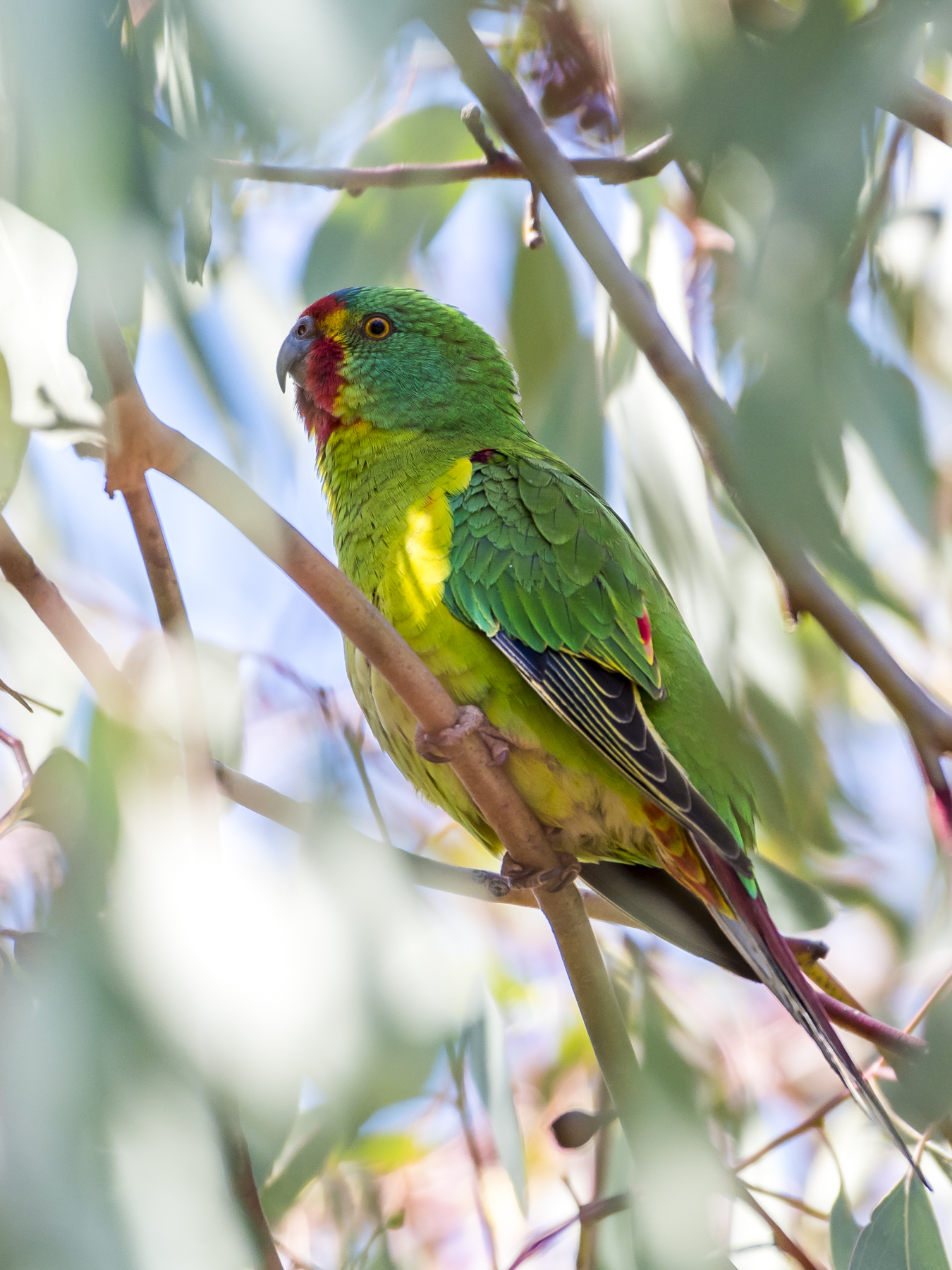
Schwalbensittich (Lathamus discolor), Foto von Gunjan Pandey.

Swift parrot (Lathamus discolor), foto by Gunjan Pandey.

Saved from Extinction? – Habitat Conservation 1

The Tasmanian Swift parrot is a current example of habitat conservation and restoration in species protection. This unusual little parrot is a migratory bird that relies on dense forests for breeding. Deforestation has led to the disappearance of the trees they feed on and the old, hollow trees where they nest. At the same time, this created numerous scattered clearings that provide ideal habitats for introduced gliding marsupials, which readily prey on the eggs and chicks of the Tasmanian swallow parakeet. This deadly combination has reduced the species’ population from hundreds of thousands in the 1980s to an estimated fewer than 300 individuals today.


Only Bruny Island, a small island east of Tasmania where gliding possums are absent, serves today as a refuge for about 100 breeding pairs. There, a large-scale conservation program is underway in which nest boxes specially designed for the swallow parakeets are hung on younger trees to compensate for the lack of natural nesting cavities. At the same time, the island is closely monitored to prevent gliding possums from crossing over from Tasmania to Bruny Island. These efforts have at least halted the immediate extinction of the swallow parakeet.