
Vom Aussterben gerettet? – Auswilderung und Verhaltens-Rekonstruktion

image_pdf

Wenn Arten nur noch in Zoos und Tiergärten überleben, aber in der Wildbahn ausgestorben sind, kann die Auswilderung ungeahnte Probleme bedeuten. Der Waldrapp ist ein Beispiel, wie es trotzdem gelingen kann: Dieser gänsegroße Ibis-Vogel war bis zum 17. Jahrhundert von Mitteleuropa bis Nordafrika und im Nahen Osten sehr häufig anzutreffen, wurde dann aber als Delikatesse entdeckt. Durch Jagd und Lebensraumzerstörung (Ausweitung der Landwirtschaft) brach die Population zusammen. In den 1990ern lebten wild nur noch etwa 200 Vögel in Marokko, zurückgezogen in den Bergen. In Europa war die Art, die hier einst als Zugvogel die Alpen überquert hatte, ausgestorben.

Bei den ersten Auswilderungsprojekten mit Tieren aus Zoos stellte sich heraus, dass das Zugverhalten nicht instinktiv war, sondern von den Eltern erlernt werden musste. Da es keine wilden Elterntiere mehr gab, die die Routen kannten, begann ein einzigartiges Projekt: In Gefangenschaft aufgezogene Waldrapp-Küken wurden auf die Farbe Gelb konditioniert, die sie mit Futter und Spielzeug in Verbindung brachten. Dann wurde ihnen mit gelben Ultraleichtflugzeugen zunächst das Fliegen beigebracht und schließlich die sichersten Wege über die Alpen gezeigt. Heute leben wieder über 300 Vögel wild und als Zugvögel in Mitteleuropa.
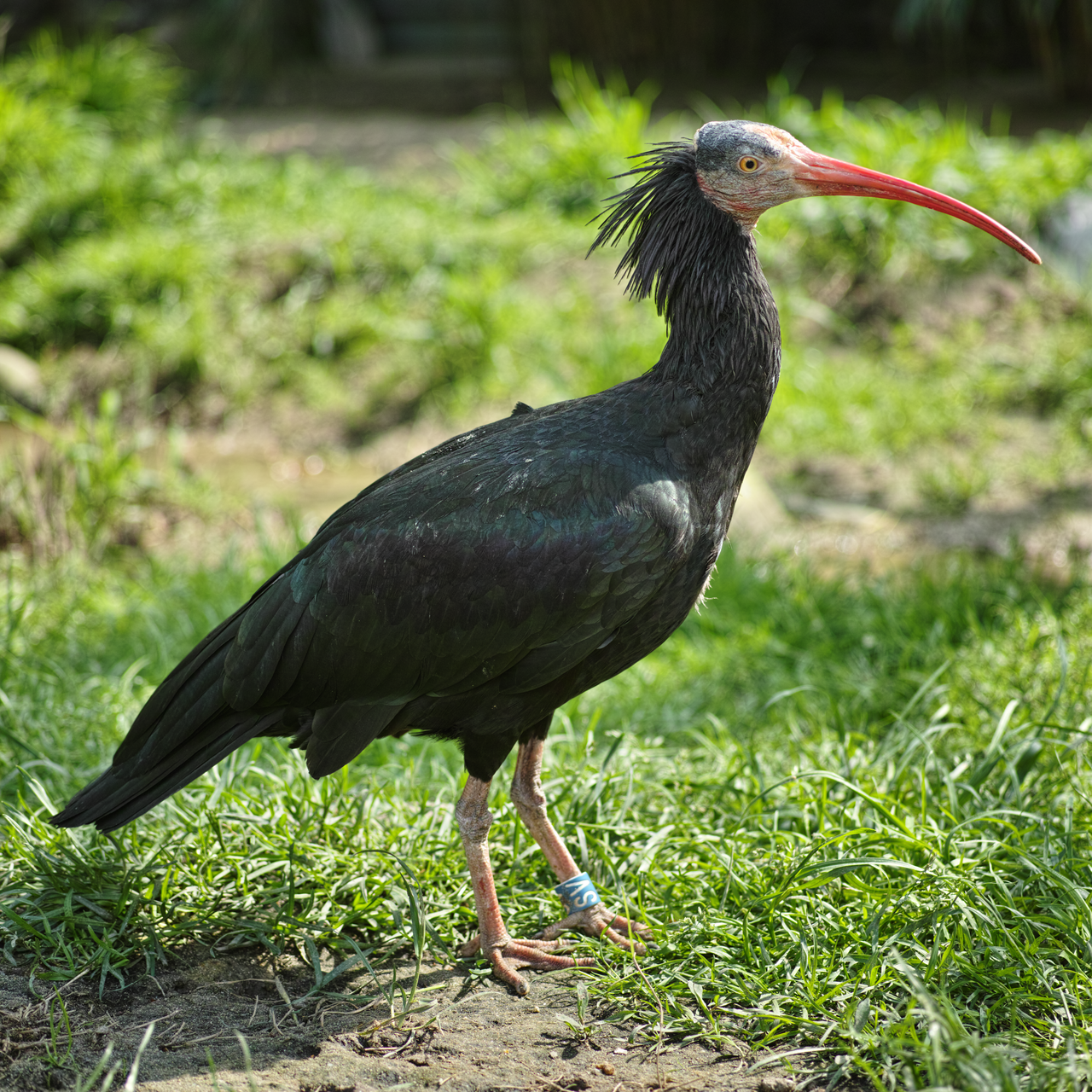
Waldrapp (Geronticus eremita), Foto von Robert F. Tobler.

Northern bald ibis (Geronticus eremita), foto by Robert F. Tobler.

Saved from Extinction? – Species Reintroduction and Behavioral Reconstruction

When species survive only in zoos and wildlife parks but are extinct in the wild, reintroduction can pose unforeseen problems. The Northern bald ibis is an example of how it can still succeed: This goose-sized ibis was very common from Central Europe to North Africa and the Middle East until the 17th century, but was then discovered as a delicacy. Hunting and habitat destruction (agricultural expansion) caused the population to collapse. By the 1990s, only about 200 birds remained in the wild in Morocco, living in seclusion in the mountains. In Europe, the species – which had once crossed the Alps as a migratory bird – had become extinct.


During the first reintroduction projects involving animals from zoos, it became clear that migratory behavior was not instinctive but had to be learned from the parents. Since there were no longer any wild parents who knew the routes, a unique project began: Lesser Kestrel chicks raised in captivity were conditioned to associate the color yellow with food and toys. They were then first taught to fly using yellow ultralight aircraft and eventually shown the safest routes across the Alps. Today, more than 300 birds once again live in the wild and migrate across Central Europe.