
Vom Aussterben gerettet? – Habitatschutz 2

image_pdf

Der flugunfähige neuseeländische Kakapo oder Eulenpapagei auf dem Gemälde neben der Vitrine ist ein weiteres Beispiel, bei dem die engmaschige Überwachung eines kleinen Schutzgebietes den Bestand stabilisieren konnte. Von 1894 bis in die 1960er Jahre versuchte man erfolglos, kleine Populationsreste zu retten und vor invasiven Mardern, Katzen und Ratten zu schützen. Im Jahr 1994 lebten nur noch 47 Vögel, die aus Schutzgründen auf kleine Inseln umgesiedelt wurden. Dort werden konsequent alle die Insel erreichenden Ratten, Katzen und Marder getötet und die Vögel in Notzeiten gefüttert. Mittlerweile beträgt der Bestand durch die jahrzehntelangem Anstrengungen wieder etwa 235 Tiere. Gleichzeitig ist so ein Refugium für viele weitere bedrohte Vogelarten entstanden.
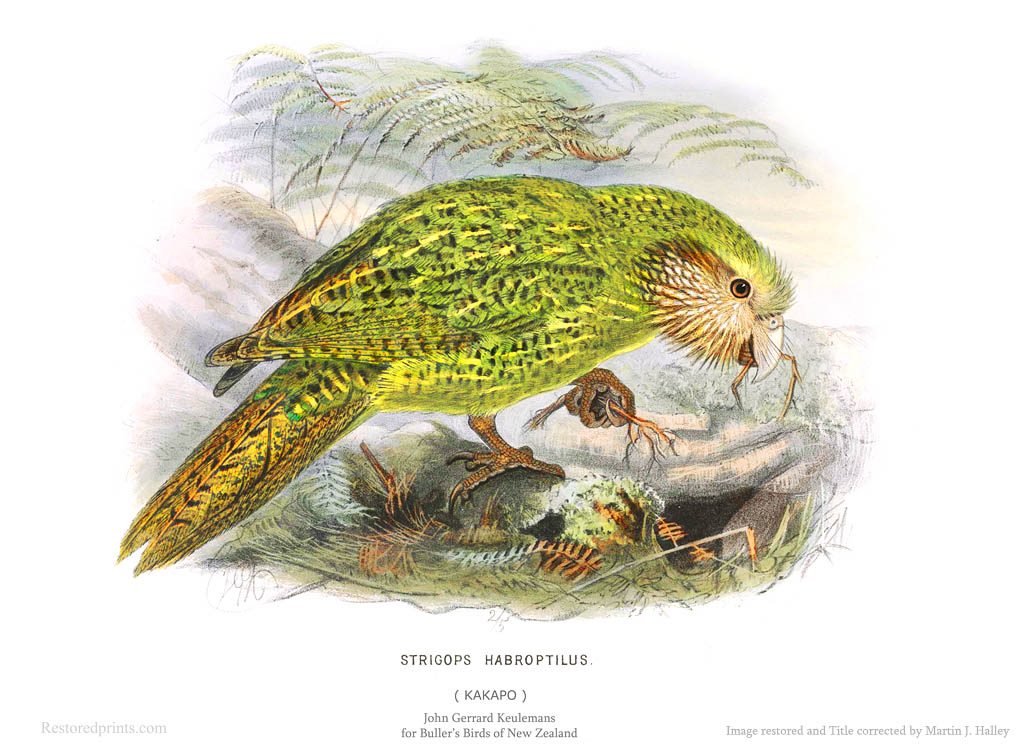
Kakapo oder Eulenpapagei (Strigops habroptilus), Illustration von John Gerrard Keulemans (1872).

Kākāpō also known as owl-parrot (Strigops habroptilus), illustration by John Gerrard Keulemans (1872).

Saved from Extinction? – Habitat Conservation 2

The flightless New Zealand Kākāpō, also known as owl parrot and depicted in the painting next to the display case, is another example of how close monitoring of a small protected area has helped stabilize the population. From 1894 through the 1960s, attempts were made – unsuccessfully – to save small remnant populations and protect them from invasive martens, cats, and rats. By 1994, only 47 birds remained, and they were relocated to small islands for their protection. There, any rats, cats, or martens that reach the island are systematically killed, and the birds are fed during times of need. Thanks to decades of effort, the population has now recovered to about 235 birds. At the same time, this has created a refuge for many other endangered bird species.