
Wege des Aussterbens – Jagd

image_pdf

Schon seit gut 40.000 Jahren bringen Menschen als völlig neuartige Raubtiere mit Kontrolle über Feuer, Fernwaffen und zahme Wölfe Arten zum Verschwinden. Man spricht hier von einer aktiven Ausrottung durch Überjagung. Beispiele für so verschwundene Spezies sind bekannte Tiere der eiszeitlichen Megafauna, wie Höhlenbär, Mammut und Riesenfaultier, aber auch Riesenvögel wie der madagassische Elefantenvogel oder die Moas von Neuseeland.

Berühmtes Beispiel im Vogelsaal ist die Wandertaube, deren Bestand durch die als Sportevent organisierte massenhafte Bejagung in wenigen Jahrzehnten von gut einer Milliarde Tiere auf Null zusammenbrach. Auch das Quagga, eine Unterart des Steppenzebras, wurde durch Überjagung aktiv ausgerottet. Eines von weltweit 23 heute noch existierenden Quagga-Präparate finden Sie hinter der Sonderausstellung – und auf unserem Logo.

Nach den Jagd-Exzessen des neunzehnten und frühen zwanzigsten Jahrhunderts setzte zum Glück ein Umdenken ein. 1931 war der Grönlandwal, dessen Unterkiefer im Vogelsaal zu bewundern sind, die erste weltweit unter Schutz gestellte Tierart. Wilderei spielt allerdings immer noch eine Rolle, und in die gleiche Kategorie fällt auch der Handel mit wilden Singvögeln vor allem in Südostasien, der dort viele Vogelarten bedroht – wie beispielsweise diese Buschelster aus dem Vogelsaal.
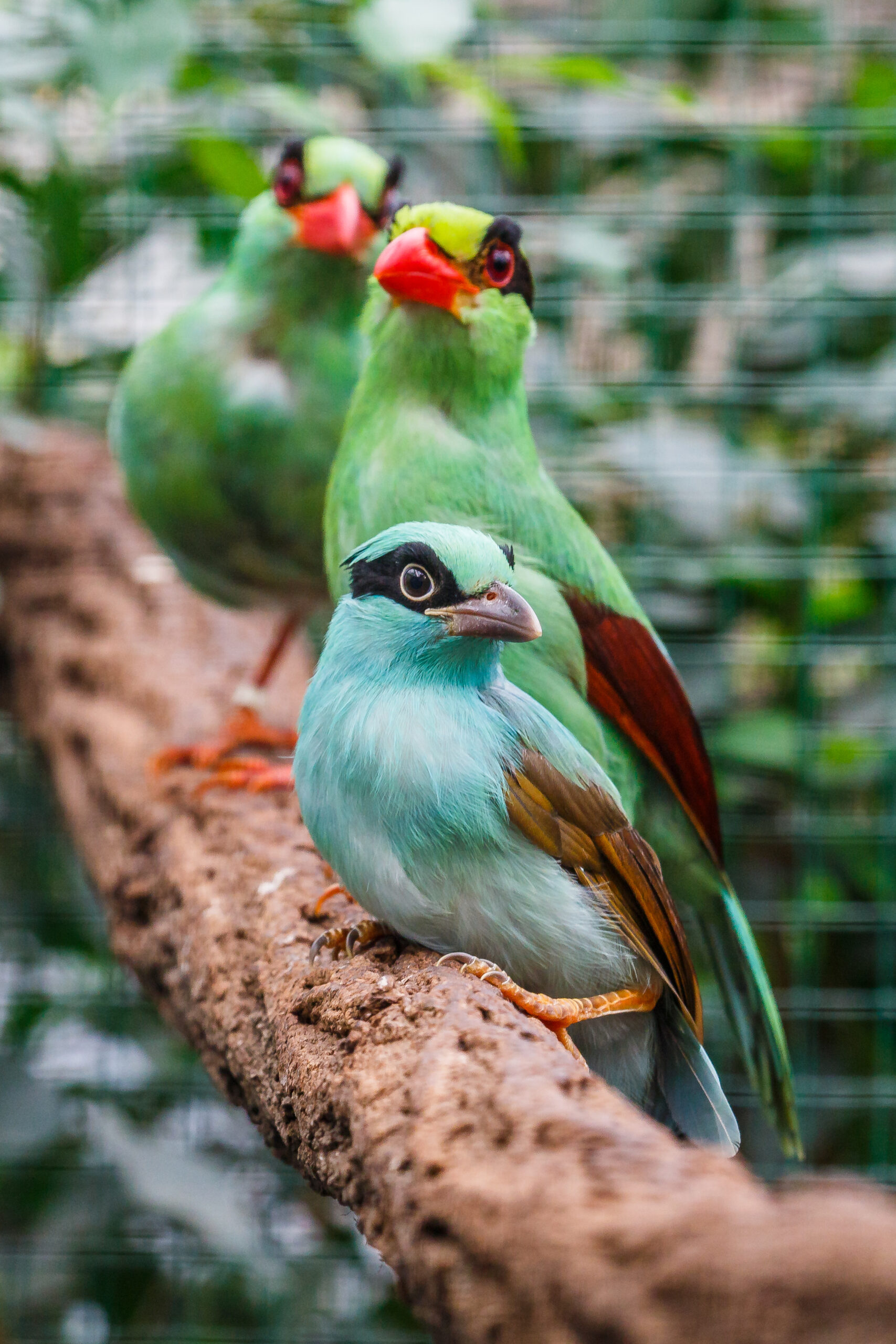
Buschelster (Cissa thalassina), aufgenommen von Václav Šilha.

Javan green magpie (Cissa thalassina), foto by Václav Šilha.

Pathways of Extinction – Hunting

For over 40,000 years, humans – as a completely new type of predator with control over fire, ranged weapons, and domesticated wolves – have been driving species to extinction. This is referred to as active extinction through overhunting. Examples of species that have disappeared in this way include well-known animals of the Ice Age megafauna, such as the cave bear, mammoth, and giant sloth, as well as giant birds like the Madagascan elephant bird and the moas of New Zealand.

A famous example in the Bird Hall is the passenger pigeon, whose population plummeted from over a billion birds to zero in just a few decades due to mass hunting organized as a sporting event. The quagga, a subspecies of the plains zebra, was also actively driven to extinction by overhunting. One of the 23 quagga specimens still in existence worldwide can be found behind the special exhibition—and on our logo.

Fortunately, following the hunting excesses of the nineteenth and early twentieth centuries, a shift in thinking took place. In 1931, the bowhead whale – whose lower jaw can be admired in the Bird Hall – became the first animal species in the world to be placed under protection. Poaching, however, still plays a role, and the trade in wild songbirds, particularly in Southeast Asia, falls into the same category, threatening many bird species there, such as this Javan green magpie from the Bird Hall.